What does lower eyelid surgery treat?

Lower eyelid surgery is primarily used to address puffy or bulging bags underneath your eyes that give the face an aged, sad, exhausted appearance. When performed by a skilled facial plastic surgeon such as Dr. Yael Halaas, lower eyelid surgery can achieve a wide range of benefits, including: 

  • Removing puffy or bulging bags under the eyes 
  • Improving the appearance of wrinkles in the area
  • Correcting lower eyelids that show white under the iris
  • Reducing loose skin and excess fat around the lower eyes
  • Correcting asymmetry of the lower eyelids
Schedule a Consultation

Schedule A Consultation

Lower blepharoplasty procedure details

Lower blepharoplasty takes about one hour, and can be performed under local anesthesia and PO sedation — or general anesthesia, depending on patient preference. Dr. Halaas has an accredited operating room for which she studied, and she also serves as an accreditation inspector around the tri-state area.

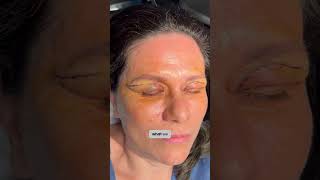
During lower eyelid surgery in NYC, Dr. Halaas removes excess skin, muscle, and fat, and may also re-position fat and/or tighten lax muscles as needed. She makes the incision just underneath the lower lashes, in the natural creases of the area so that when healed, it will be nearly invisible.

In cases where excess fat is the main cause of sagging or bulging, the best approach is often to simply remove the fat through an incision inside the lower eyelid. This is a procedure known as a transconjunctival blepharoplasty.

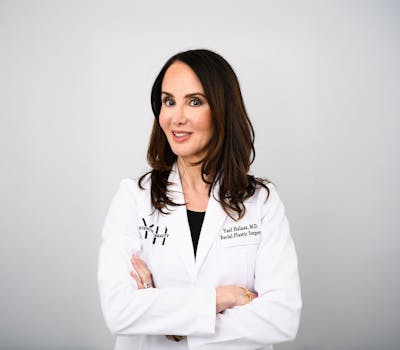
I had lower blepharoplasty, and my only regret is not having it done sooner. I am truly amazed at how everything turned out and could not have asked for a better surgeon and overall experience! As if her expertise wasn’t enough, her top-notch staff was icing on the cake.

G.G.

Banner background

Lower Blepharoplasty Cost

The starting cost for lower blepharoplasty is $11,000. During your consultation with Dr. Halaas, details about your procedure, individual health considerations, and the anticipated surgical approach will be thoroughly discussed. When considering cosmetic surgery pricing, it's important to recognize that the final cost is tailored to meet each patient's unique needs. This personalized approach ensures transparency and clarity regarding the total investment required for your aesthetic goals.

We aim to empower you to make informed decisions about your cosmetic journey by providing a detailed breakdown of costs. Call our office for more details and schedule a consultation for a more personalized quote just for you.

Recovery and results

The average amount of recovery time for lower eyelid surgery is one week off of work and regular activities. The first two days after surgery should be spent at home comfortably, where you can easily apply ice and take it easy. During recovery, your eyes will likely feel tight, sore, sticky and dry, and/or swollen, and they may also be discolored due to bleeding. You may also experience some eye leakage as your eyes heal, and you will have stitches in the incisions. Your vision also may be blurry, and you may find that your eyes are very light-sensitive. Bruising and inflammation can last from one week to one month, but discomfort should be minimal. Your sutures will be removed five days following surgery. To speed healing and keep swelling at bay, keep your head elevated with soft, “moldable” cold compresses over your eyes. Avoid contact lenses and all forms of exercise for at least three weeks. Results are apparent at about six weeks after surgery. You will have follow-up visits with Dr. Halaas at one week, one month, three months, six months, and one year.

Lower Blepharoplasty FAQ

What is the difference between upper and lower blepharoplasty?

Upper and lower blepharoplasty treat different areas of the eyelids. Upper blepharoplasty focuses on excess skin and tissue of the upper eyelids, while lower blepharoplasty is designed to address concerns below the eyes, such as under-eye bags, puffiness, excess skin, and certain types of lower eyelid laxity.

Some patients benefit from treating the upper and lower eyelids together for more comprehensive rejuvenation. Dr. Halaas evaluates the entire eye area and recommends a surgical approach based on your anatomy and specific concerns.

Will lower blepharoplasty get rid of under-eye bags?

Lower blepharoplasty can significantly improve under-eye bags caused by bulging or displaced fat beneath the lower eyelids. Depending on your anatomy, Dr. Halaas may remove or reposition fat and address excess skin or lax supporting tissues to create a smoother transition between the lower eyelid and cheek.

Not every under-eye concern is caused by the same issue. Hollowing, pigmentation, skin texture, and fluid retention may require different or complementary treatments, which is why an in-person evaluation is important.

What is transconjunctival lower blepharoplasty?

Transconjunctival lower blepharoplasty is a surgical technique performed through an incision inside the lower eyelid. Because the incision is internal, there is no external skin incision associated with this approach.

This technique may be appropriate for patients whose primary concern is excess or bulging lower eyelid fat and who do not require significant removal of excess skin. Dr. Halaas determines whether a transconjunctival or external approach is most appropriate based on your anatomy and treatment goals.

Will I have visible scars after lower blepharoplasty?

The visibility of scarring after lower blepharoplasty depends on the surgical technique used. When an external incision is needed, it is typically placed just beneath the lower eyelashes and within the natural contours of the eyelid to help make the healed scar less noticeable.

For appropriate patients, a transconjunctival approach may be performed through an incision inside the lower eyelid, leaving no external skin incision. Dr. Halaas selects the technique based on the amount of excess skin, fat, and tissue laxity that needs to be addressed.

How long do lower blepharoplasty results last?

Lower blepharoplasty results are generally long-lasting because excess fat and skin that are surgically removed do not simply return. However, the procedure does not stop the natural aging process, and the tissues around the eyes will continue to change over time.

Genetics, sun exposure, skin quality, smoking, and lifestyle can influence how the eye area ages after surgery. Protecting your skin from the sun and following an appropriate skincare routine may help maintain your results.

Who is a good candidate for lower blepharoplasty?

Good candidates for lower blepharoplasty are generally healthy adults who are concerned about persistent under-eye bags, bulging fat, excess lower eyelid skin, or other age-related changes that create a tired or aged appearance. Candidates should have realistic expectations and be medically healthy enough to undergo elective surgery.

Because under-eye concerns can have different causes, Dr. Halaas evaluates factors such as skin quality, fat distribution, eyelid support, facial anatomy, medical history, and previous treatments before determining whether lower blepharoplasty is the most appropriate option.

Written by Dr. Halaas

Schedule A Consultation

In-Office Virtual

© Yael Halaas MD. All Rights Reserved.

Terms & Conditions Privacy Policy

Contact Us